
Most people who feel wiped out during Navratri are not short of food. They are eating the wrong food at the wrong time: fried sabudana at breakfast, sweet tea mid-morning, nothing until a heavy evening meal. Energy spikes, drops, and by 4 pm the day is a write-off.
The foods allowed during vrat already include some of the best slow-burning ingredients in Indian cooking. This plan uses them to keep energy level across all nine days, whether you are at a desk, at home or keeping up a workout.
A note before you start: fasting rules differ between families and regions. Treat the ingredient lists here as common practice, not scripture, and follow your own household's rules where they differ. If you are pregnant, diabetic or on regular medication, plan the fast with your doctor.
The three principles
Eat every three to four hours. A long gap followed by a large meal is the pattern most likely to leave you groggy. Small, regular meals keep blood sugar even.
Put protein on every plate. Curd, paneer, peanuts, almonds, pumpkin seeds. Protein is what keeps you full between meals and stops the afternoon slump. Most vrat plates have almost none.
Roasted over fried, fruit over sugar. Sabudana vada, puri and sweets are the main reason fasting feels heavy. The same ingredients baked, roasted or cooked as khichdi behave completely differently in the body.
What to build meals from
| Group | Use freely | Use sparingly | Avoid (most traditions) |
|---|---|---|---|
| Grains and flours | Sama (barnyard millet), kuttu, singhara, rajgira | Sabudana | Wheat, rice, oats, maida, lentils |
| Vegetables | Lauki, pumpkin, sweet potato, arbi, cucumber, tomato, spinach | Potato | Onion, garlic, most leafy greens in some traditions |
| Protein | Curd, paneer, milk, peanuts, almonds, walnuts, pumpkin and melon seeds, makhana | Khoya and condensed-milk sweets | Eggs, meat, pulses |
| Fruit | Banana, apple, papaya, pomegranate, orange, dates, coconut | Fruit juice | Packaged juices with added sugar |
| Fats | Ghee, groundnut oil, coconut | Deep-fried anything | Hydrogenated fat, palm oil snacks |
| Seasoning | Sendha namak, cumin, black pepper, green chilli, ginger, lemon | Sugar, jaggery | Table salt, asafoetida in some traditions |
The nine-day plan
The plan rotates three days of meals three times, which keeps shopping simple. Swap any item with another from the same row of the table above.
| Day | Morning (7 to 8 am) | Mid-morning (11 am) | Lunch (1 to 2 pm) | Afternoon (4 to 5 pm) | Evening (7 to 8 pm) |
|---|---|---|---|---|---|
| 1, 4, 7 | Curd with sliced banana and a spoon of pumpkin seeds | Roasted makhana | Sama khichdi with peanuts, cucumber raita | Apple with 8 almonds | Kuttu roti with lauki sabzi and curd |
| 2, 5, 8 | Sama upma with peanuts and curry leaves | A handful of mixed nuts | Kuttu chilla with paneer filling, mint chutney | Papaya or pomegranate | Sweet potato chaat with lemon and sendha namak, buttermilk |
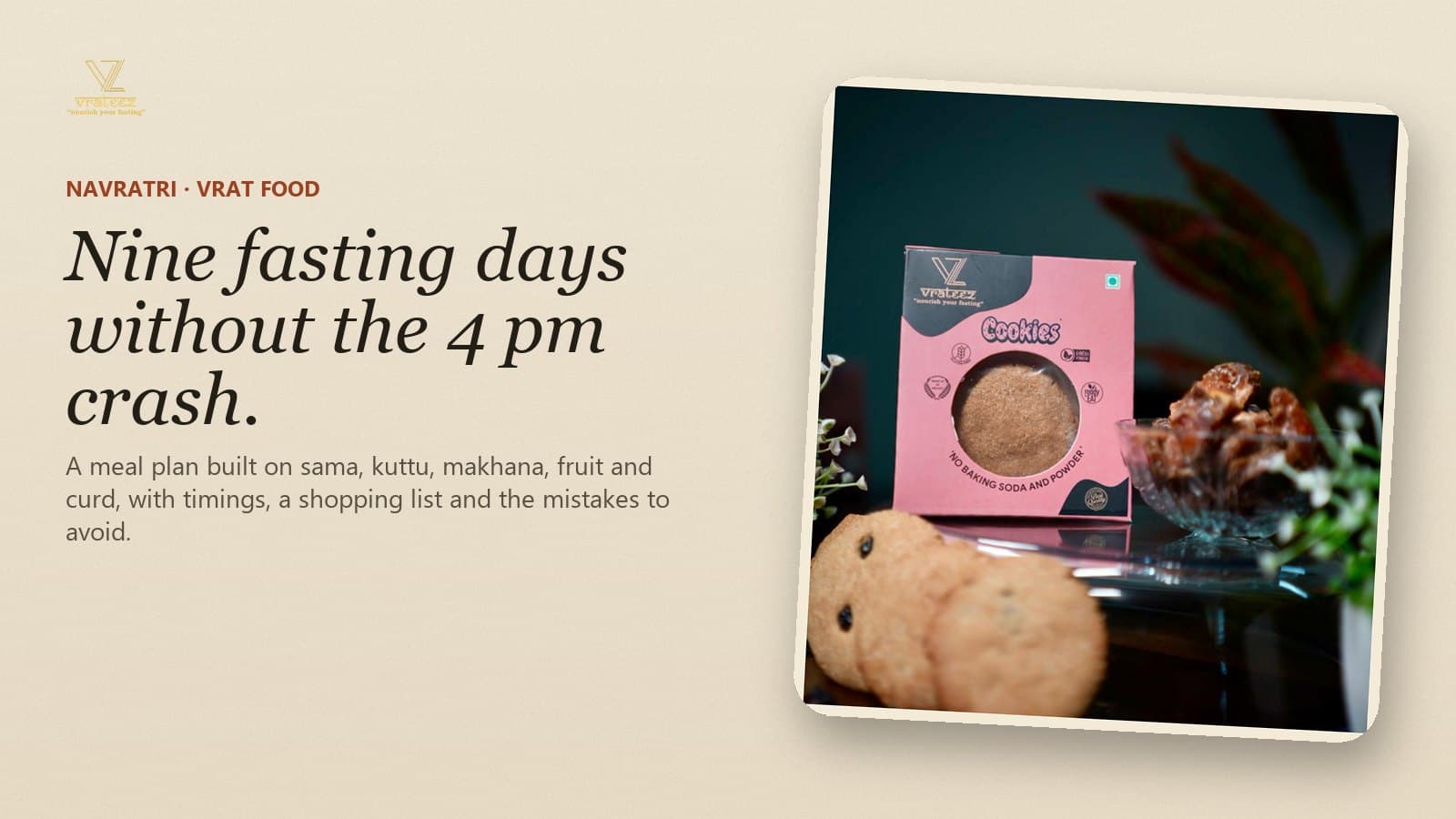
| 3, 6, 9 | Fruit bowl with curd and crushed walnuts | Roasted makhana or a millet cookie with no added sugar | Sama rice with pumpkin sabzi and a bowl of curd | Dates with a glass of milk | Paneer and vegetable stir-fry in ghee, cucumber salad |
Through the day: water, coconut water or buttermilk. Thirst reads as hunger and as fatigue, and most people drink far less during vrat because tea replaces water.
Timings that make the difference
Do not skip the 11 am and 4 pm snacks. They are small on purpose. Their job is to stop the gap between meals from stretching to six hours, which is when dizziness starts.
Keep tea to two cups, with less sugar than usual. Tea on an empty stomach at 7 am and again at 4 pm is a large part of why fasting feels harder than it should. Have it after food, not instead of it.
Finish dinner two hours before bed. Fasting days often end late and heavy. Keep the evening meal lighter than lunch and you will sleep better and wake up hungry for breakfast, which is how the next day should begin.
If you work out during Navratri
Light to moderate training is fine for most healthy adults. Three adjustments keep it from going wrong.
- Forty-five minutes before: a banana with a few peanuts or almonds.
- Within an hour after: curd, paneer or milk. This is the meal most people skip, and it is the one that prevents next-day fatigue.
- Shorten the session by a third on days when you eat only once or twice, and skip heavy lifting on those days altogether.
Five mistakes that cause the crash
- Sabudana as the staple. It is nearly pure starch. Have it occasionally as khichdi with peanuts and curd, not as vada and not daily.
- Sweet tea as a meal. A spike at 4 pm and a slump at 5.
- Potato at every meal. Rotate in sweet potato, pumpkin, lauki and arbi.
- Nothing until evening. Then a large fried meal. This is the single biggest cause of feeling unwell during vrat.
- Packaged "vrat" snacks without reading the label. Many are fried in palm oil and sweetened with sugar. The first three ingredients tell you everything.
Shopping list for the week
Sama (1 kg), kuttu flour (500 g), singhara flour (250 g), peanuts (500 g), almonds and walnuts (250 g each), pumpkin seeds (200 g), makhana (250 g), dates (250 g), curd and paneer for the week, ghee, sendha namak, cumin, green chillies, lemon, ginger, and fruit for three days at a time: bananas, apples, papaya, pomegranate. Vegetables: lauki, pumpkin, sweet potato, cucumber, tomato.
When you are at work or travelling
Fasting at a desk is harder than fasting at home because everything around you is tea, biscuits and fried canteen snacks. Carry the 11 am and 4 pm snacks with you: a small box of roasted makhana, a handful of nuts, a banana, and if you buy packaged snacks, ones made without grains, onion, garlic or added sugar. A one-litre bottle of water on the desk, finished by lunch and refilled, solves half the afternoon tiredness on its own.
Eat on time, put protein on every plate, and let fruit do the sweetening. Navratri is meant to leave you lighter and clearer, not drained. With the plate built this way, it usually does.